
★★★★★
“
Tried the dinner question from sign 1 that same night. She actually talked. Proper talked. I didn't expect that.
S
Sarah M.Brisbane


Most of us assume the move to high school sorts itself out. Usually it does — but the children who struggle tend to show the same small signs first, months before anyone calls it a problem. They are easy to miss, and easy to act on once you know them.
5-minute read • 5 actionable steps
• Ages 10–13 • 100% free
Pop your details in and the PDF lands in your inbox in under a minute.
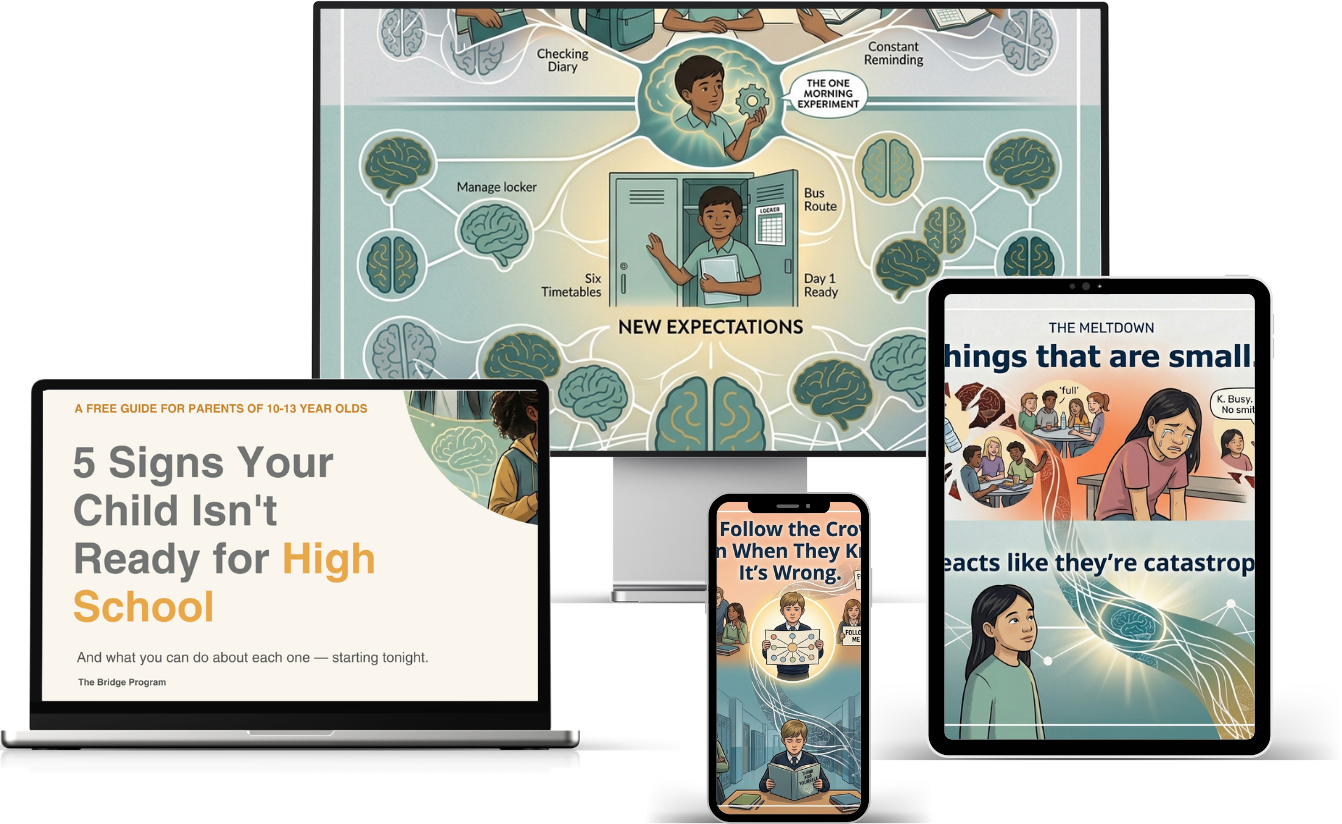
The guide arrives straight away. No waiting, no upsell page.
We never sell or share your email. Not with anyone.
One click to unsubscribe, and it works the first time.
Tried the dinner question from sign 1 that same night. She actually talked. Proper talked. I didn't expect that.
Downloaded this at 10:30pm after a really hard week. Didn't expect much. Actually felt less alone by the end of it.
A friend sent this around our school WhatsApp group. Half the mums in there have downloaded it now. Good read.
Four things worth knowing about the year your child starts high school.
Rise in teen anxiety since the start of high school
Of kids keep their best friend through the move
Of all mental illness has begun by age 14
New teachers to get used to, on day one
None of this is meant to frighten you. It is what the pattern looks like when a child goes through the move without much preparation. The changes start small, and they compound.
Children who feel socially isolated or academically overwhelmed in the first eight weeks of Year 7 are three times more likely to develop persistent anxiety than those who feel supported. It often looks like stomach aches, headaches and not wanting to go in — not like anxiety.
If a child learns to cope alone during Year 7, they tend not to come back when things get harder. By Year 8 they have a separate emotional life you don't have much access to. The door is still there — but by then it usually needs someone to open it deliberately.
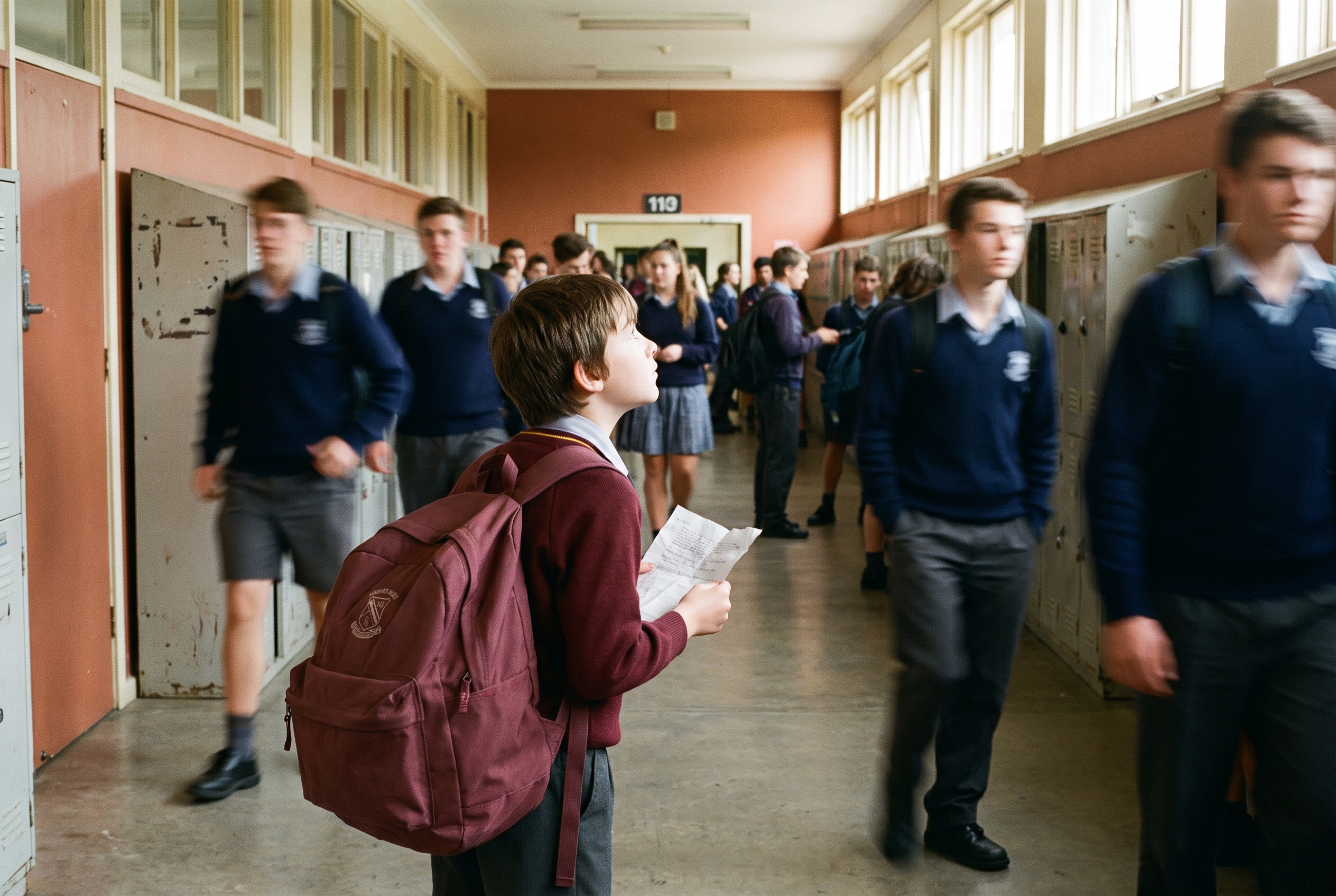
Same child. Building four times the size.
A child who never built a steady sense of self will borrow one from whoever offers it. By Year 9 that often means the group making the worst decisions looks like the most welcoming one. Risky behaviour doesn't start with bad kids. It starts with lost ones.
Students who disengage in Year 7 rarely get back to what they were capable of. The link runs all the way through to Year 12 — not because they lack the ability, but because they stopped believing school was for them.
The move to high school isn't a phase to wait out. It's a window — and right now, yours is still open.
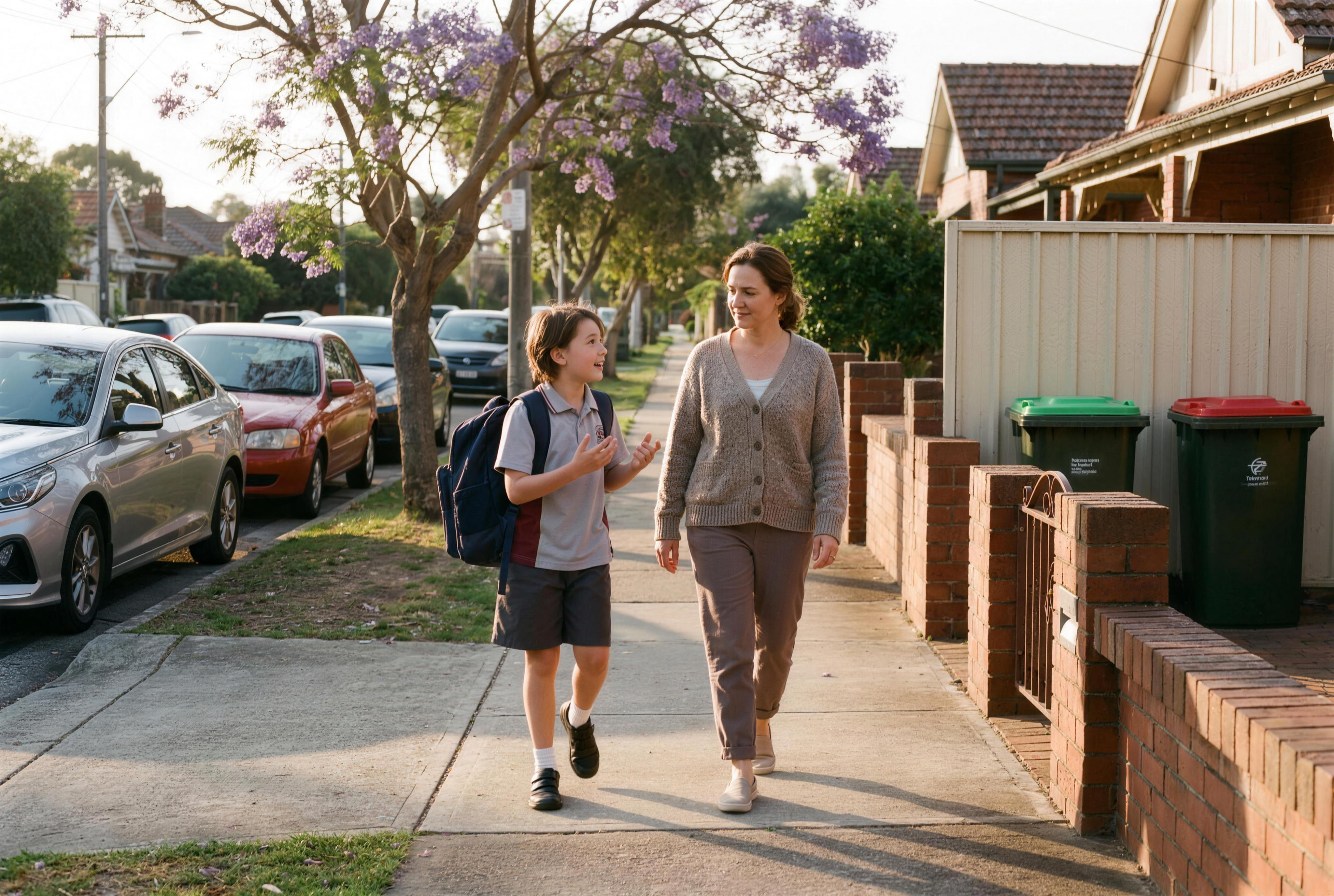
Each sign comes with what tends to happen if it's left alone — and one concrete thing you can try tonight. Tap any of them to read it.
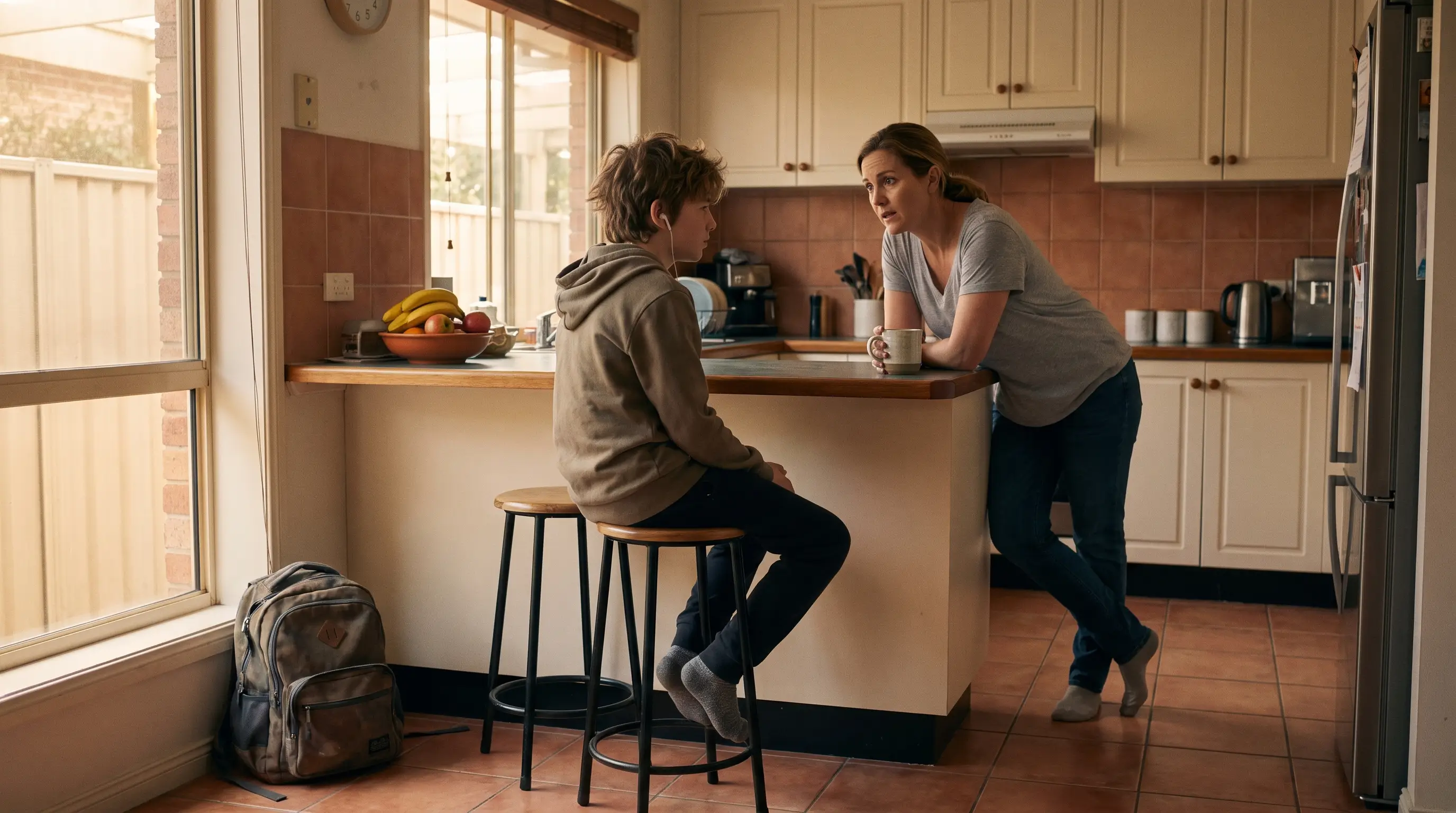
Communication is already closing — and once Year 7 starts you lose the school gate, the teacher who knew them, and the other parents you used to check in with. The guide covers why "How was school?" fails, and the one replacement question that actually opens the door.
By Year 9 they have a separate life you have no access to — and when something serious happens, you'll be the last to know, not the first.
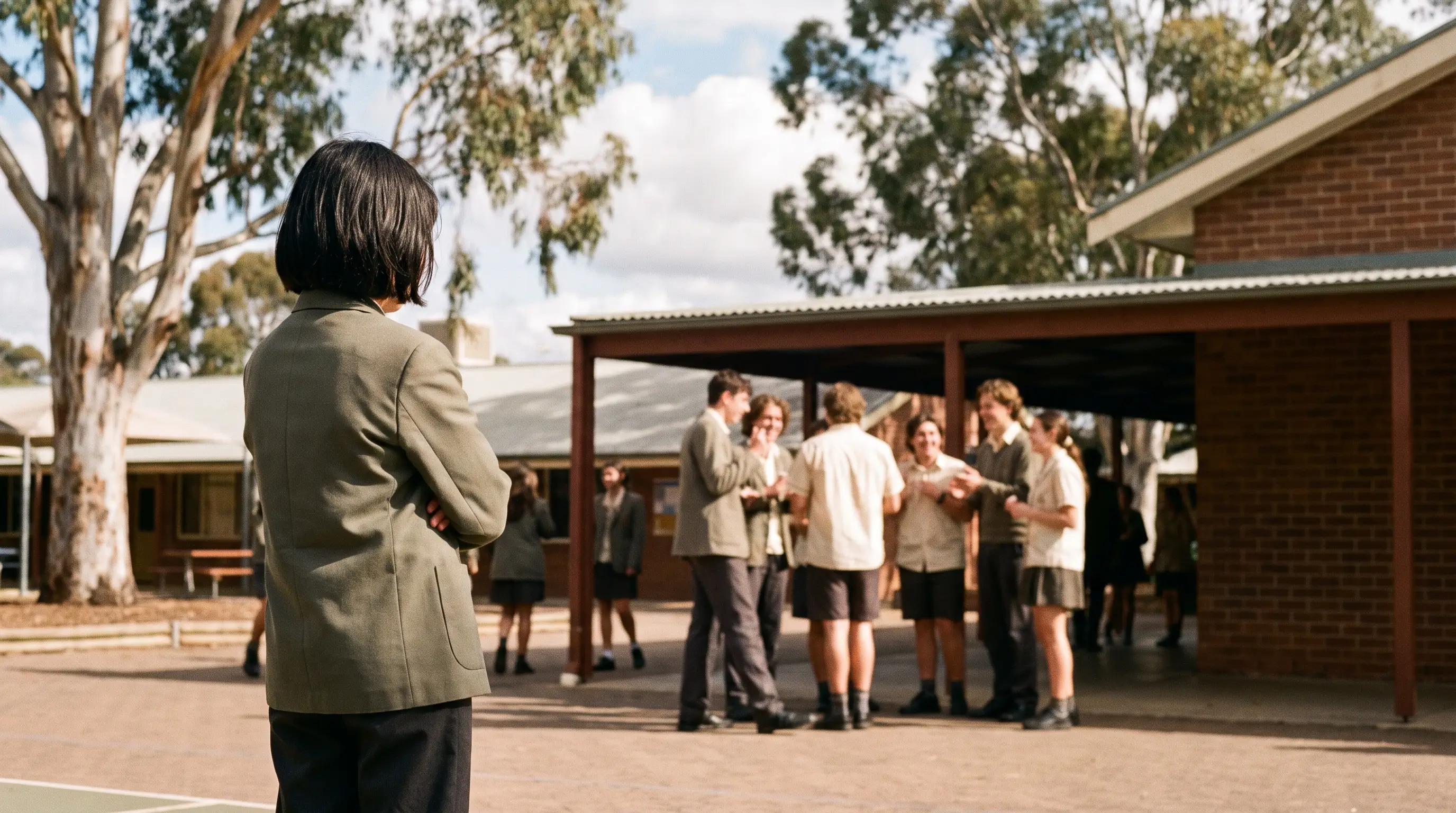
Bold at home, invisible at school. That's performed confidence, and it collapses the moment they walk into a building full of Year 10s and 11s who seem impossibly big and impossibly sure of themselves.
"I'm only confident where I'm comfortable" is a rule that can follow them a long way past school.
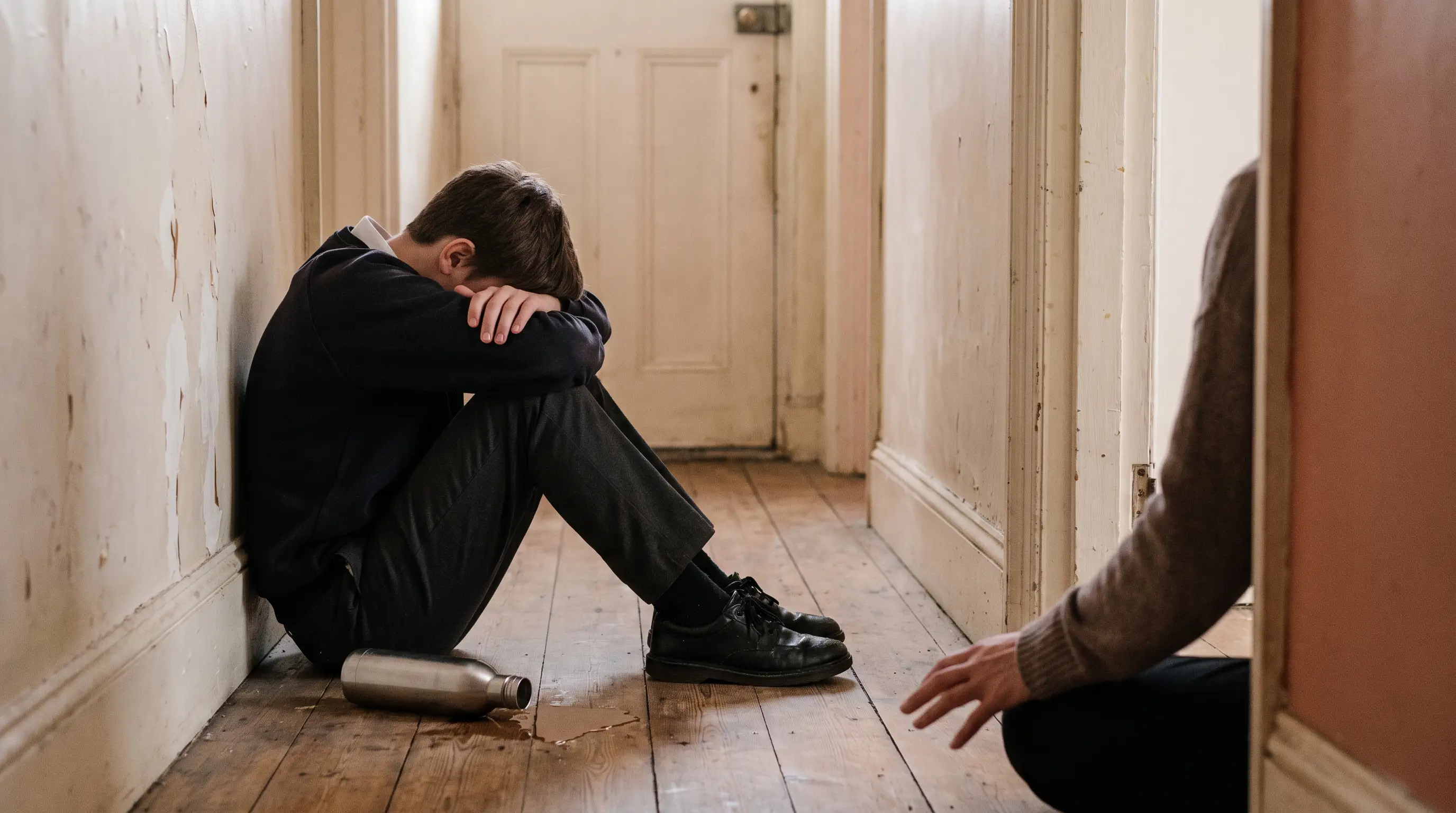
A lost drink bottle. A friend who didn't save them a seat at the canteen. A teacher who was a bit short with them. Things that are objectively small — and your child reacts like they're catastrophic. The guide covers what the meltdowns are actually telling you.
What looks like a rough patch in Year 7 tends to harden into a pattern by Year 9. Half of all lifetime mental illness begins before 14 — which makes this the window, not later.
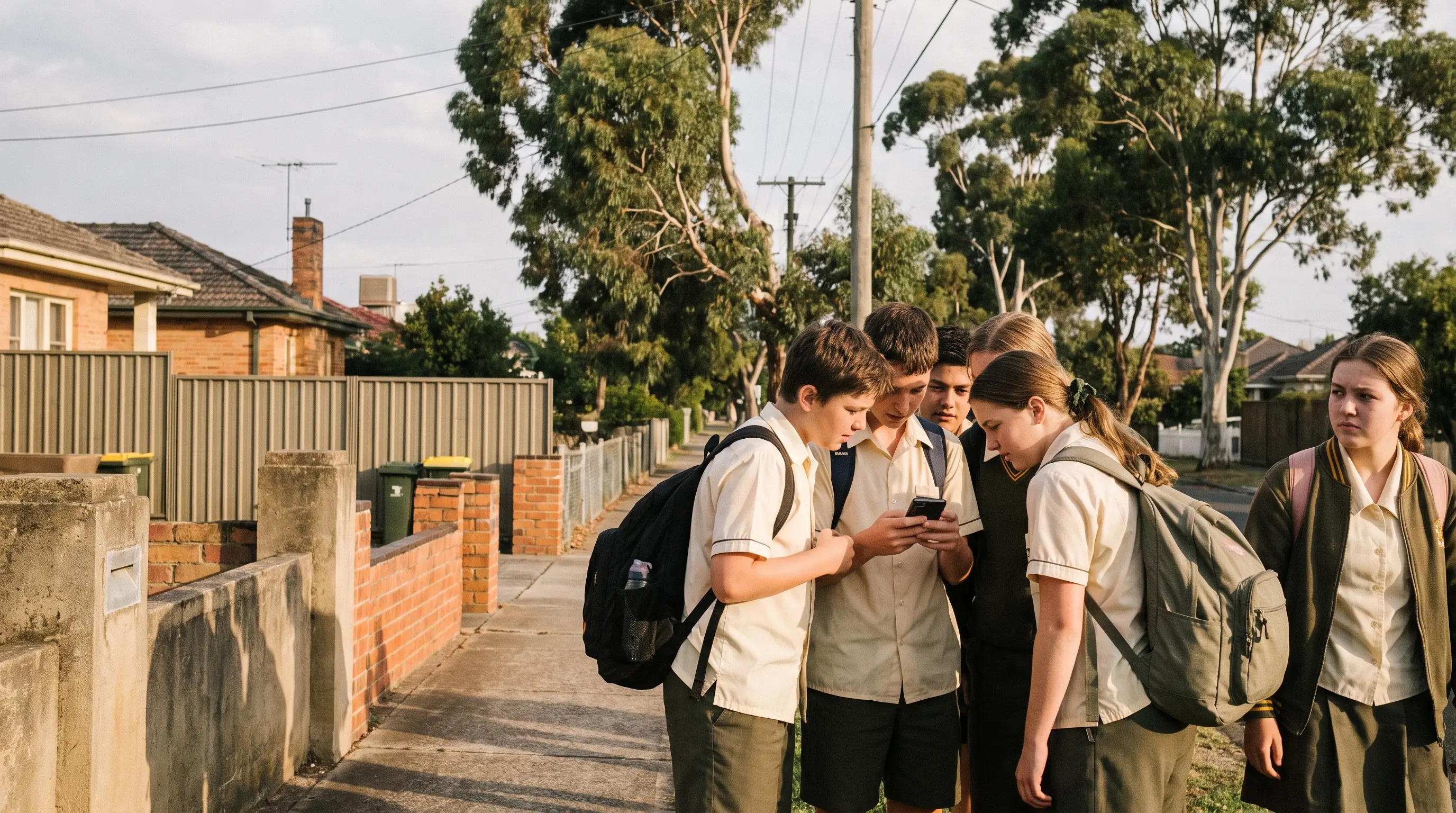
Their brain is wired for fitting in right now. The social pressure of high school — friendship groups forming in the first week, the unspoken rules about who sits where — is about to multiply that by ten. The guide covers how to build independent thinking before they need it.
The child who goes along with small things at twelve is the one who finds it hardest to step out of the group at fifteen.
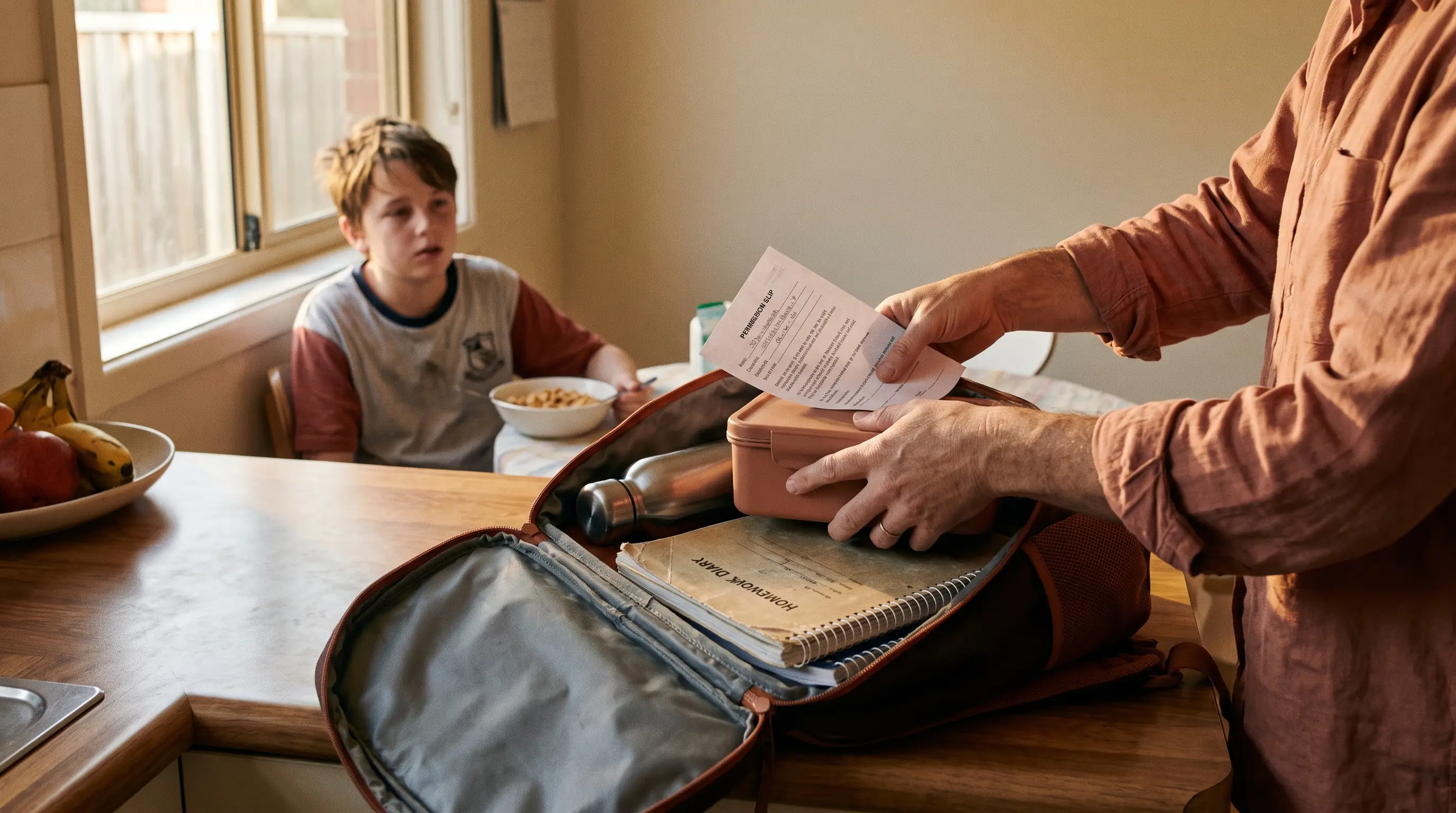
You're still packing the bag, checking the diary, and reminding them about everything from PE gear to permission slips. Year 7 expects them to manage a locker, a timetable, homework from six teachers and a bus — all from day one. The guide covers the one morning experiment that changes it.
You become their organisation permanently. At sixteen you're still running their schedule. The dependency you build now has a very long tail.
"Isn't my child a bit young to be leaving primary school and walking into a building full of teenagers? Isn't this change a bit too big, a bit too fast, for someone who still needs a hug before bed and a light on in the hallway?"
We've all had that quiet moment"My wife sent me this. Rolled my eyes. Read it anyway. Sign 5 was uncomfortably accurate about me as a dad. We're working on it."
"Read it on the train home. By the time I got to sign 3 I understood my son better than I had in months. Wish I'd had this a year ago."
"I taught high school for 11 years and still found things in here I hadn't considered as a parent. Sign 4 especially."
The guide shows you what to look for, what each sign turns into if it's left alone, and what to do about it — starting tonight.
Tell us where to send it, and it's yours in a minute.
Including the awkward ones.
Completely free. No credit card, nothing held back. You'll get the full 8-page PDF in your inbox within 60 seconds.
After that you'll get a handful of short emails over the following weeks — practical tips, conversation starters, and things you can actually use. Think of it as a quiet support system in your inbox, from a parent going through the same thing. One click to unsubscribe, any time.
That's the tricky part. Most kids seem fine on the surface. They say "I'm good" and get on with it. The five signs in this guide are the ones that hide behind "fine" — the slow withdrawal, the performed confidence, the quiet loss of who they were.
If you read it and none of them apply, you've lost five minutes. If even one of them lands, you'll be glad you read it now and not in six months.
Fair question. Most parenting content gives you theory and leaves you to work out the rest. Every sign in this guide ends with something to try tonight.
Not "reflect on your parenting journey." An actual sentence to say, a specific question to ask, or one thing to do differently tomorrow morning. The test is simple: try one of the five, and see whether your child responds differently.
No. The signs apply whether your child is about to start high school or has just started. If they've already begun and you're noticing changes — the withdrawal, the meltdowns, the friendship struggles — it becomes more useful, not less.
The things to try work whether they're in Year 6 or halfway through Year 7. The window is still open. It just won't be open forever.
Written by an Australian parent, for Australian families, about the transition our kids actually go through. The feeder primaries merging. One classroom teacher becoming eight. Orientation day in November. The January nerves.
It isn't generic advice translated from an American parenting blog. It was built from inside the same system yours is in.
You'll get the PDF straight away, then three short emails over the following week. Each one has something you can use that day.
After that you'll hear from us occasionally, when there's something worth sending. One click to unsubscribe, and your email is never shared with anyone. We don't sell data, we don't do spam, and we don't send 47 emails a week.
Raising Thinkers Pty Ltd · Adelaide, South Australia · © 2026. All rights reserved.
This guide is general information for parents, written from lived experience. It is not psychological, medical or clinical advice, and it isn't a substitute for speaking to your GP, your child's school, or a qualified professional. If you're worried about your child's mental health, please talk to someone who can help.
By requesting the guide you agree to receive it and a short series of related emails from Raising Thinkers. We will never sell, share or misuse your personal information, and you can unsubscribe at any time with a single click. How we handle your information — and the additional protections we apply to anything relating to children — is set out in our Privacy Policy.
This website is not affiliated with, endorsed by, or in any way officially connected to Facebook, Instagram or Meta Platforms Inc. FACEBOOK and INSTAGRAM are trademarks of Meta Platforms Inc. It is also not affiliated with, endorsed by or connected to Google LLC, and GOOGLE and YOUTUBE are trademarks of Google LLC. Our advertising may appear on these platforms, but Raising Thinkers operates independently of them.