
★★★★★
“
[Paste this parent's own words here, verbatim. Aim for roughly 40–70 words — long enough to describe a specific change, short enough to read at a glance. Do not tidy their grammar.]
[F]
[First name][Suburb, State]

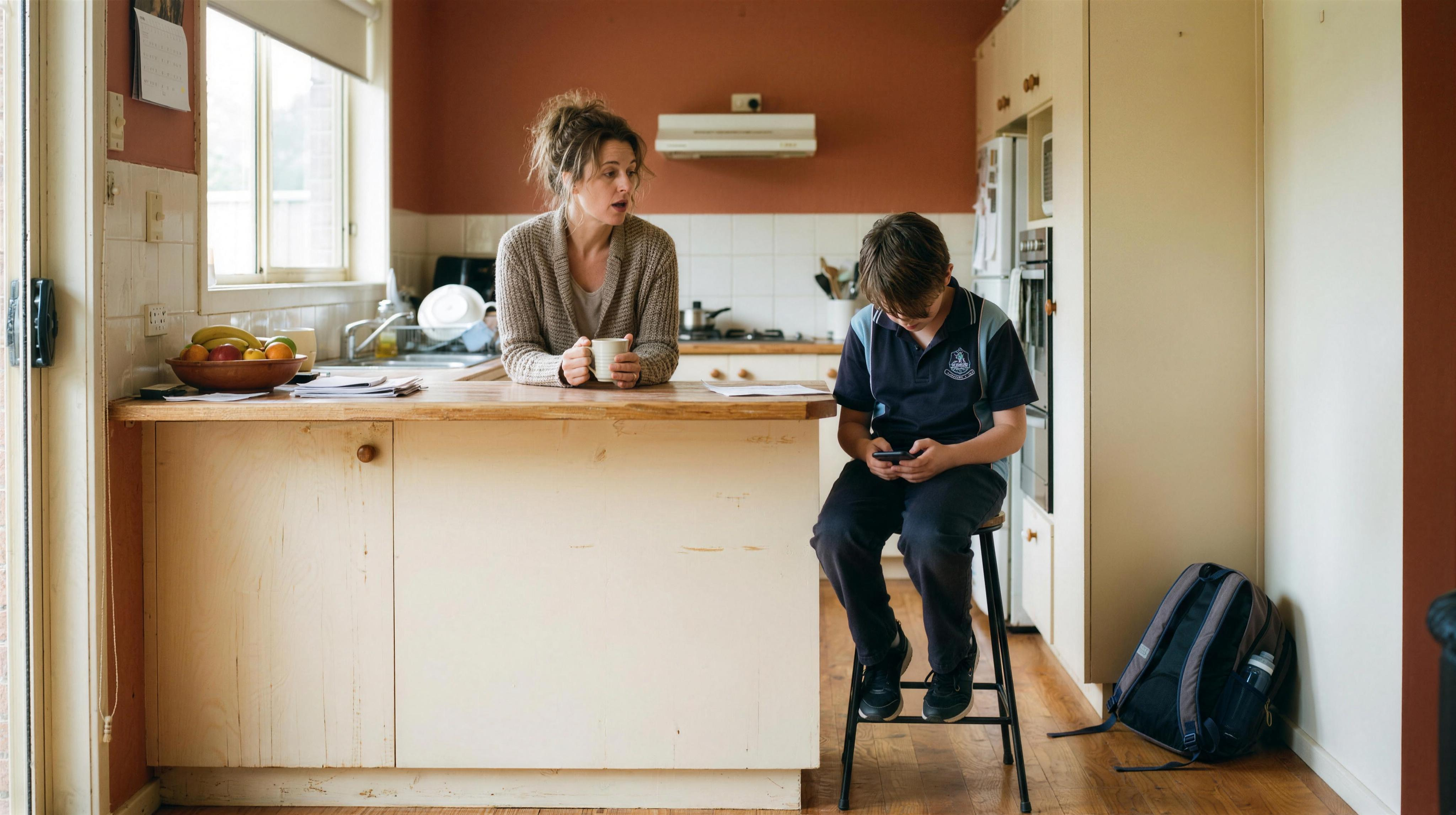
The leap from Year 6 to Year 7 is bigger than anyone tells you — new school, new body, new pressures, all at once — and it lands while they're still so young. Most parents only realise how hard it was after their child has already gone quiet. This is how you prepare them before that happens, together.

Watch it together. Read it on your own. The same framework, two ways in.
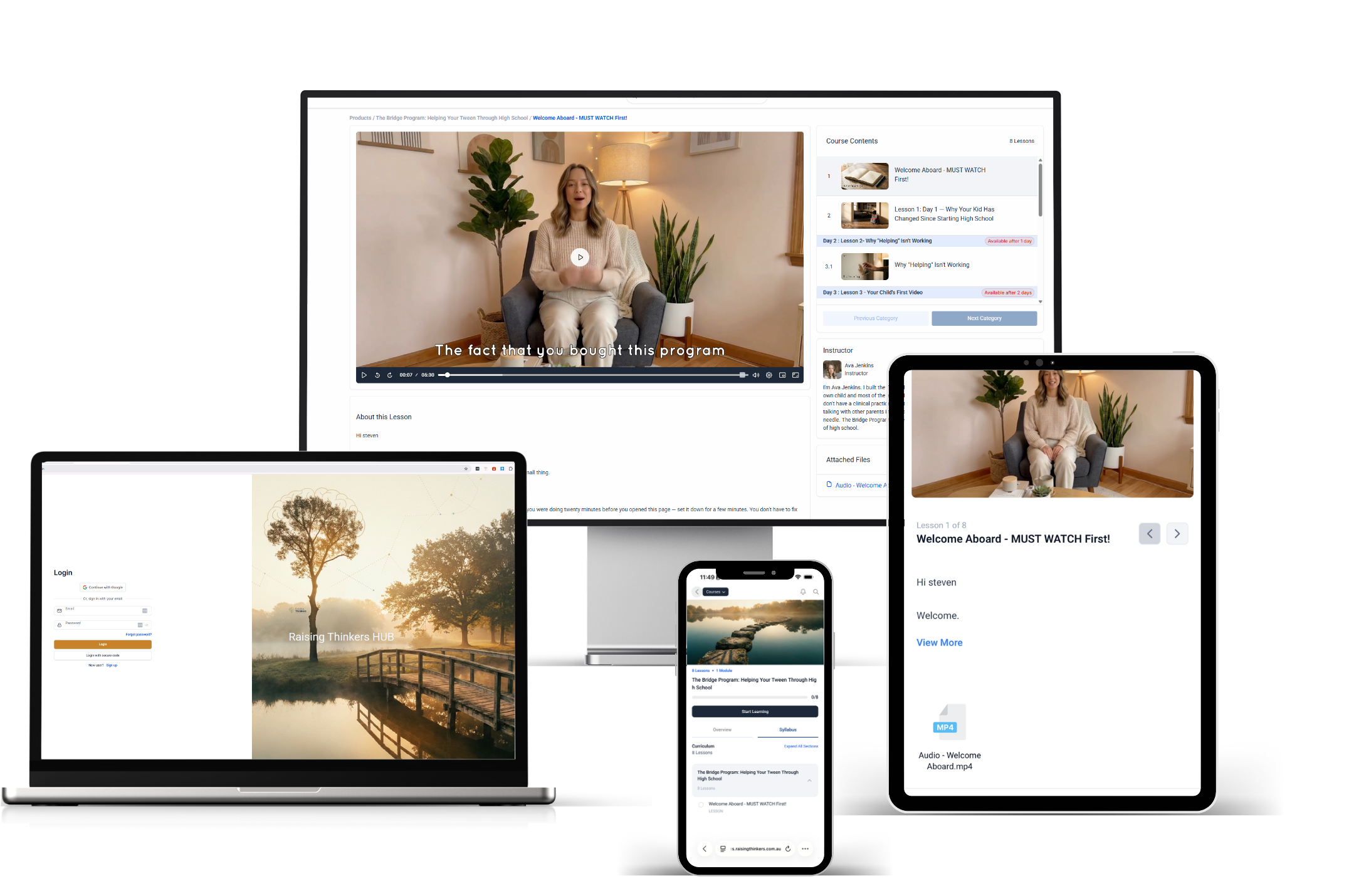
What it is: a five-day program you and your child do at home — about ten minutes a day. Four short days prepare you; on the fifth, the two of you have a real conversation about what's coming.
Why it matters: the time to do this is now, while they still tell you things. Once high school starts and it all gets too much, most kids go quiet — and you end up guessing. This reaches them while it's still easy.
One-time payment · Instant access · Lifetime access · 30-day money-back guarantee

4.7/5 based on 1,212 reviews
You don't need convincing that this is coming. You need to know what to do about it.
Rise in teen anxiety since the start of high school
Of kids keep their best friend through the move
Of all mental illness has begun by age 14
New teachers to get used to, on day one
Every resource you've found was written for you. None of them included your child. So you've been carrying the whole thing on your own.
This one doesn't work that way.
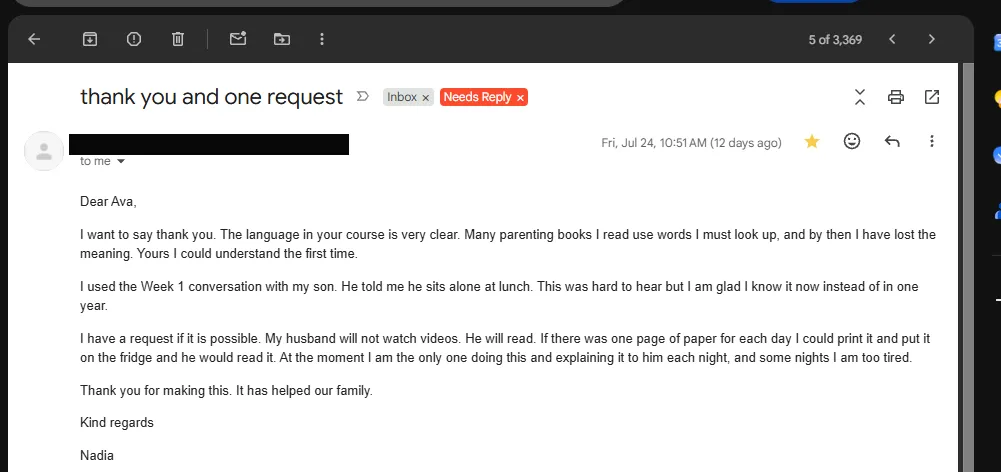
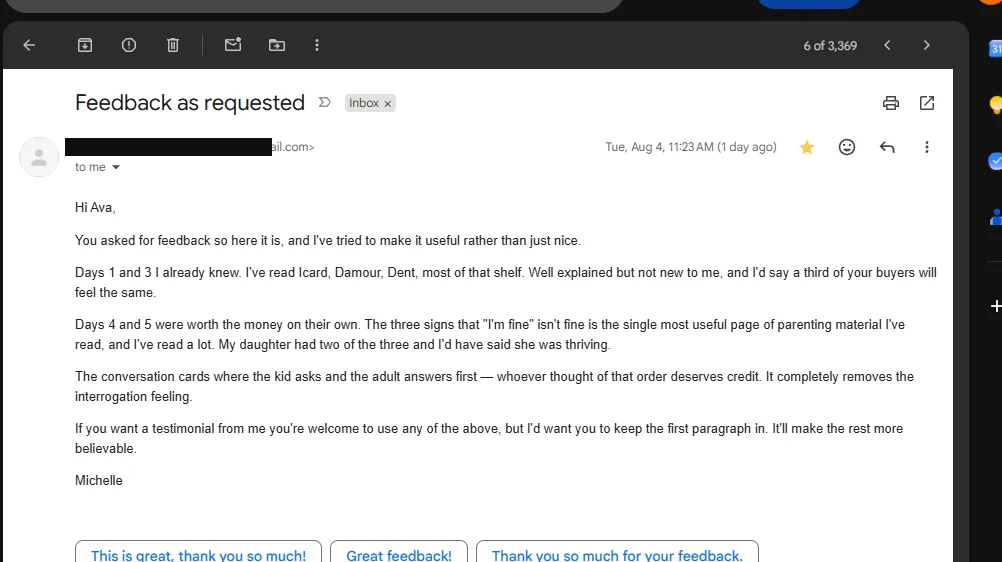
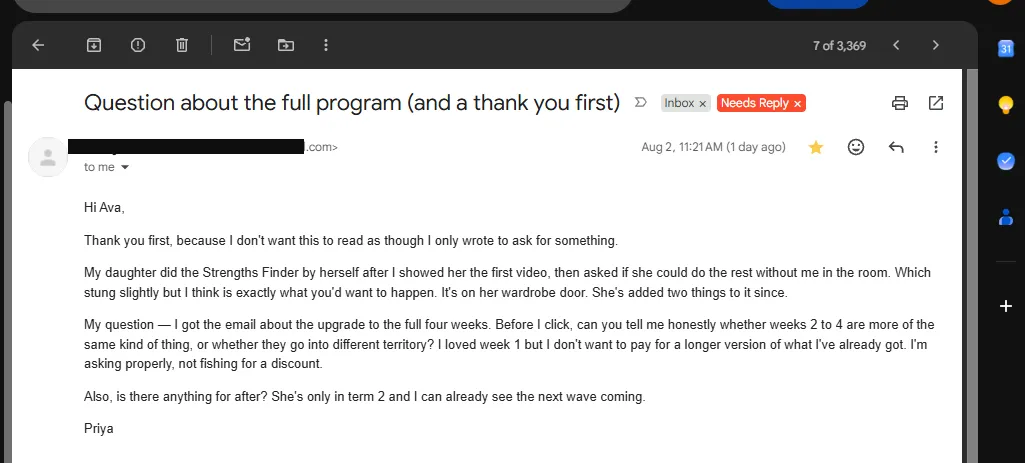
Unedited words from families who went through the five days.
[Paste this parent's own words here, verbatim. Aim for roughly 40–70 words — long enough to describe a specific change, short enough to read at a glance. Do not tidy their grammar.]
[Paste this parent's own words here, verbatim and unedited.]
[Paste this parent's own words here, verbatim and unedited.]
[Paste this parent's own words here, verbatim and unedited.]
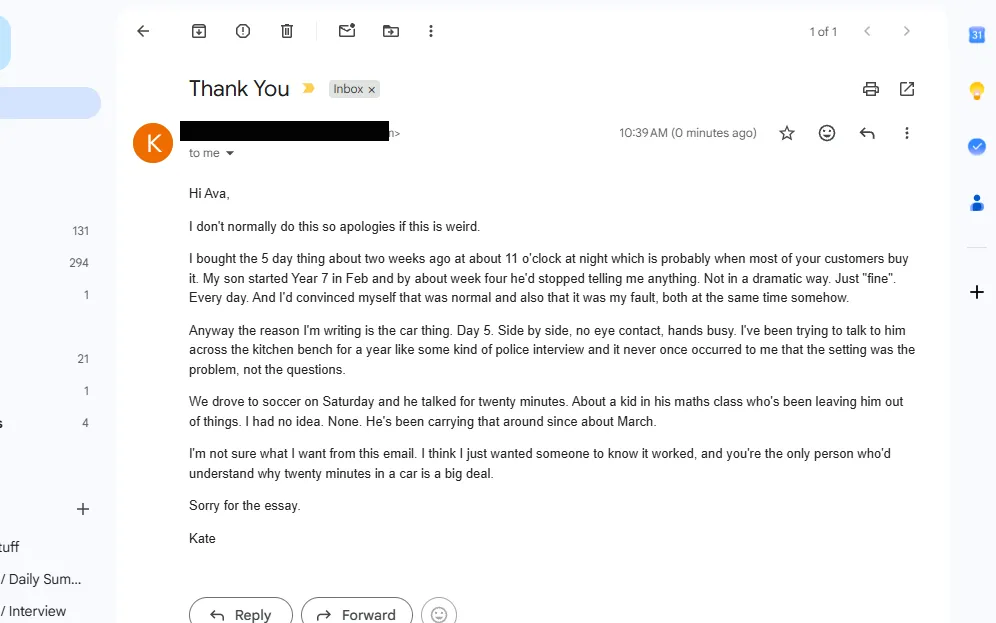
Unretouched screenshots, shared with permission.


4.7/5 based on 1,212 reviews
Day 1 rearranged my head. I had been treating his attitude as a behaviour problem — rudeness, ingratitude, the whole lot. Nine minutes into the first video and I understood I was watching a scared kid, not a rude one. That single reframe changed how I speak to him. I stopped correcting the tone and started asking what happened before the tone. He's a different kid in the mornings. Four kids, no time, still finished the whole thing. That tells you something about how it's put together.

My husband and I both watched it, separately, then argued about it, then agreed. We were both rescuing. Different styles — I smooth things over, he goes in hard at the school — same effect. She'd stopped telling us anything because everything she told us turned into an intervention. We've done nothing for a fortnight except witness. That's it. She's started reporting things again. Small things. But she's talking, which is the whole point, and I don't think we'd have got there by ourselves

My daughter is the kid teachers love. Organised, polite, top of everything. So I assumed she was fine. Day 4 has three signs that 'I'm fine' isn't fine, and she had all three. All three. I read them twice and then went and sat on the end of her bed. Turns out she'd been eating lunch in the library since week two so she wouldn't have to work out where to sit. Six weeks. I had absolutely no idea,

When you look at your child and feel they're not ready, you're not being over-protective. You're seeing something real — and there's a reason for it.
High school asks an eleven- or twelve-year-old to suddenly operate like a small adult. Navigate a huge campus. Manage a timetable, a locker, six different teachers. Handle far more freedom, far less supervision, and a phone in their pocket. Read an entirely new social world and find their place in it — fast.
But the part of the brain that runs all of that — planning ahead, stopping to think before they act, reading a situation, handling big feelings — is years from finished. It's still growing well into their twenties. That's the gap. Not intelligence. Not character. Timing.
Not maturity they'll never have — just support they haven't been given yet:
The words to name what they're feeling — before it becomes a meltdown or a slammed door.
The habits to manage themselves — the bag, the homework, the morning — without you standing over them.
The confidence to struggle with something hard and not fall apart.
The comfort to knowing that when it all gets too much, there's a door home that's still open.
Left to work it out alone, most kids cope the only way they can: they go quiet. They hide how they're really doing. They copy the other overwhelmed eleven-year-olds around them instead of coming to you. And the quiet that starts as “I'm fine” in Week 3 can slowly turn into the way things stay between you for the next six years — Year 7 through to Year 12, right when it matters most.
This is the whole reason it exists. It doesn't try to make your child older, or “ready” overnight — nothing can do that. What it does is build the one thing that actually closes the gap: a parent who knows what's coming, and a child who still talks to them.
When your child has a calm, steady adult to come back to, they don't have to face this leap on their own. For now, that steady support has to come from you — and this program is how you give it, before they need it, not after.
One-time payment · Instant access · Lifetime access · 30-day money-back guarantee
4.7/5 based on 1,212 reviews
Your child isn't a project you're working on. They're doing this alongside you.
One-time payment · Instant access · Lifetime access · 30-day money-back guarantee
Four short days of preparation. Then one conversation you'll both remember.
What's about to change inside your child — who they think they need to become, the way friendship groups get torn up and rebuilt, and the pulling-away that catches most parents off guard. After this, you'll spot the signs before they turn into problems.
Why fixing, advising and reassuring is the exact thing shutting your child down — and the simple alternative that keeps the door open.
Your child watches a story and does a short activity about who they are, on their own, without you watching. They won't know it, but this is quietly getting them ready for Day 5.
The exact script, the right setting, and the three rules that make tomorrow land. You'll know what to say, when to say it, and what not to do.
You're ready. They're ready. You sit side by side — not face to face — and have the conversation most families never get to until it's too late. It won't be a movie moment. It'll be better.
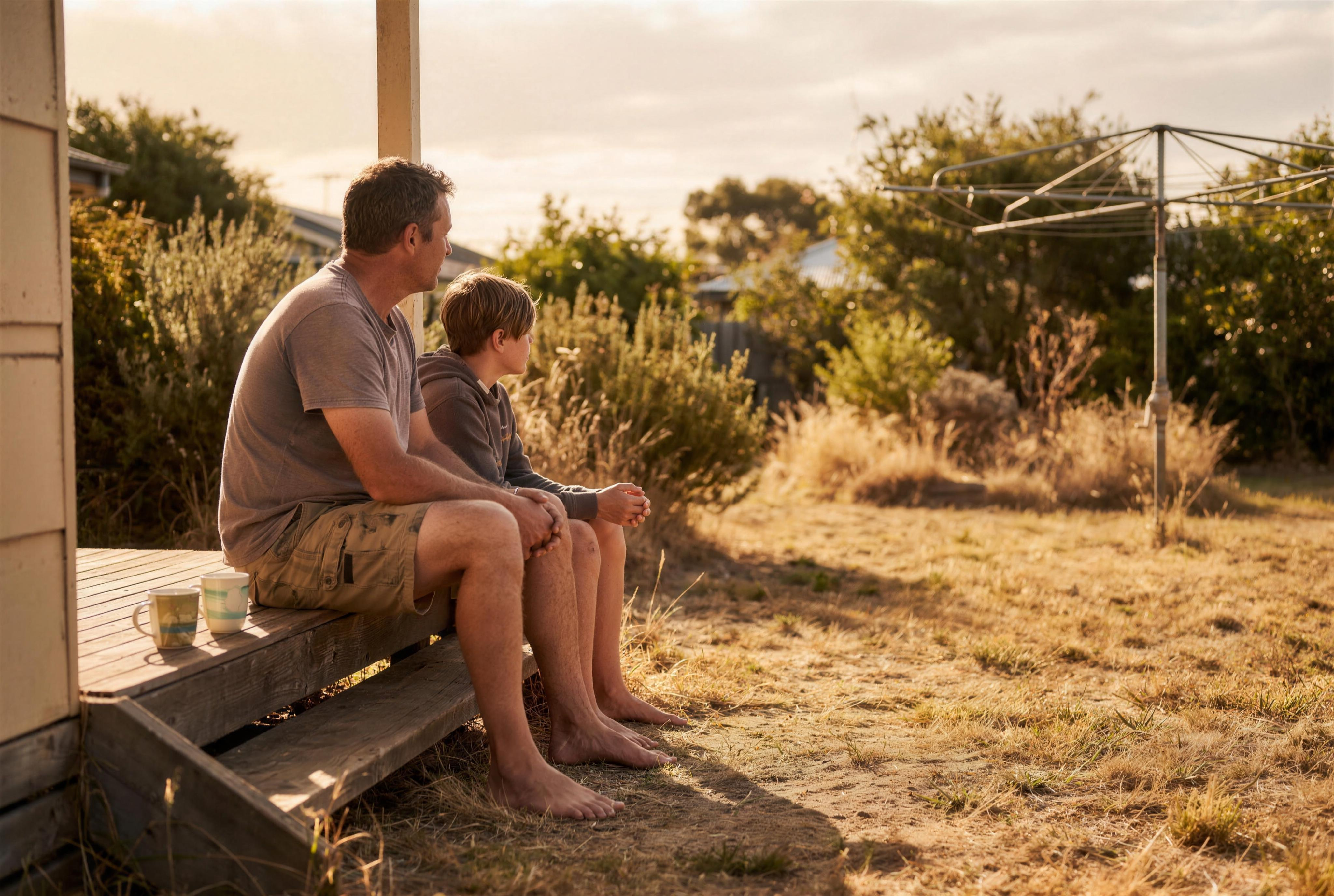
Everything builds to hereHard things are easier to say when you're not looking straight at someone. That's why Day 5 happens on the back step, or in the car, or walking the dog.
Four days of preparation, and then a conversation that finally goes somewhere — because by then you both know what to say.
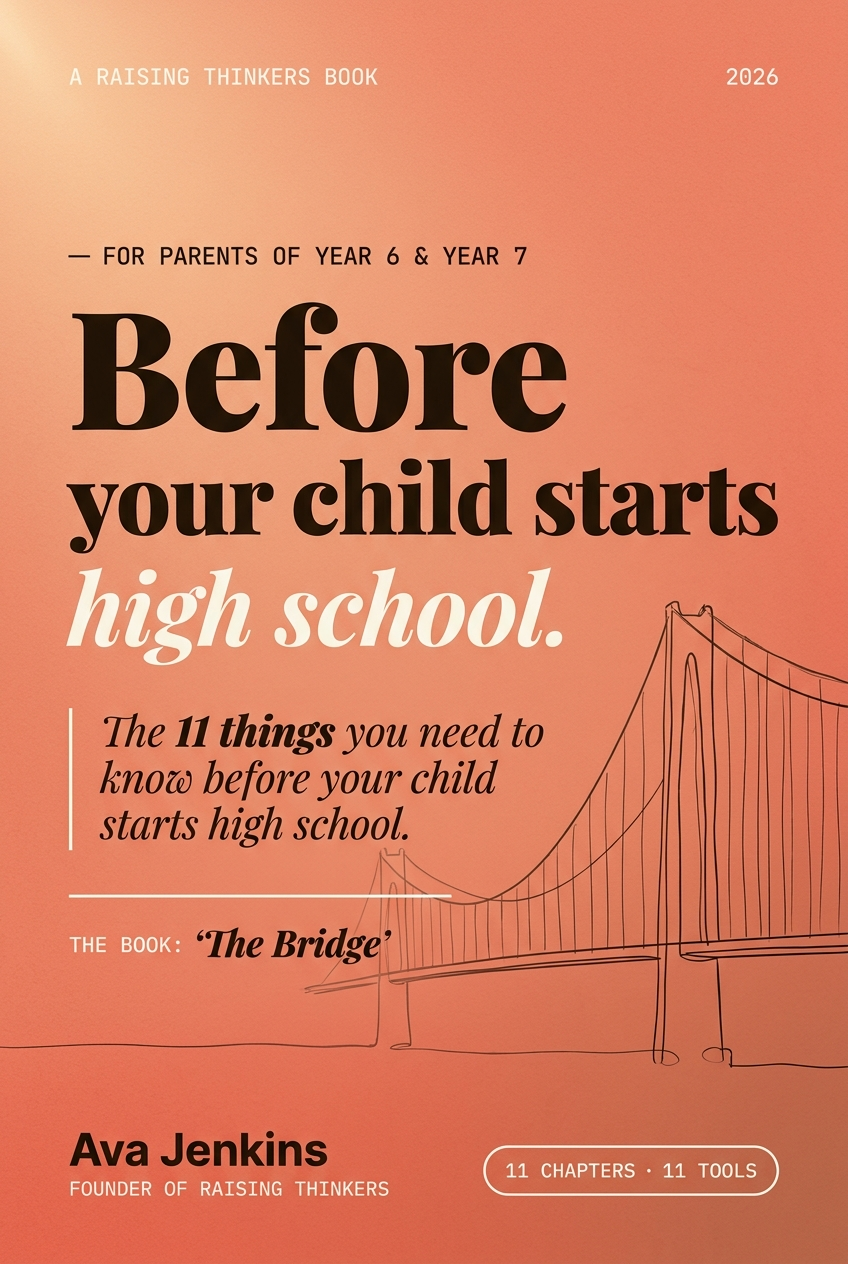
The program gets you through the transition — the moment your child stops talking and you don't know why. But high school isn't one hard moment. It's six years of them — Year 7 all the way through to Year 12. The Bridge is the whole map: the 11 things you'll wish someone had handed you before it all started.
The Bridge is the map for the eighteen months either side of the move to high school — the window most parenting books skip. Every chapter names something that is already happening, then gives you the words to use.
Four chapters are marked below. They cover the conversations most of us keep putting off — not because they don't matter, but because nobody hands you a script.
All eleven chapters, plus the Family Bridge Agreement at the end. Yours free with the program.
You could fill a shelf with books about raising tweens. Almost none of them are built for the exact moment your child is about to walk into — or for getting the two of you through it, together. That's the difference.
One-time payment · Instant access · Lifetime access · 30-day money-back guarantee
Every lesson, every printable, the audio versions — and the full book, free with your copy. Nothing to add on later, nothing held back for a higher tier.
4.7/5 based on 1,212 reviews
The thing I want to praise is small and specific: you told me where to have the conversation, not just what to say. Side by side. No eye contact. Doing something with our hands. I'd been doing it across the kitchen table like an interview, which explains twelve months of one-word answers. We washed the car. He told me about a group chat he'd been left out of and then told me he didn't want me to do anything about it, he just wanted me to know. I nearly fell over. That single reframe changed how I speak to him. I stopped correcting the tone and started asking what happened before the tone. He's a different kid in the mornings. Four kids, no time, still finished the whole thing. That tells you something about how it's put together.

The Alex story did it. My boy went completely still watching it and then said 'that's what it feels like.' He's never had words for it before. He's not a talker. But he had words for it after that, and he's used them twice since — once about a teacher and once about a kid on the bus. The conversation cards changed the dynamic in our house and I'm not exaggerating. She picks a card, she asks the question, and the rule is the adult answers first. As a stepmum that order matters enormously — I'm not interrogating her, I'm going first and being honest, and then she chooses how much to give back. We've done them at dinner four times now and the younger ones want in. That's not what you designed them for but it's what's happening

The conversation cards changed the dynamic in our house and I'm not exaggerating. She picks a card, she asks the question, and the rule is the adult answers first. As a stepmum that order matters enormously — I'm not interrogating her, I'm going first and being honest, and then she chooses how much to give back. We've done them at dinner four times now and the younger ones want in. That's not what you designed them for but it's what's happening.

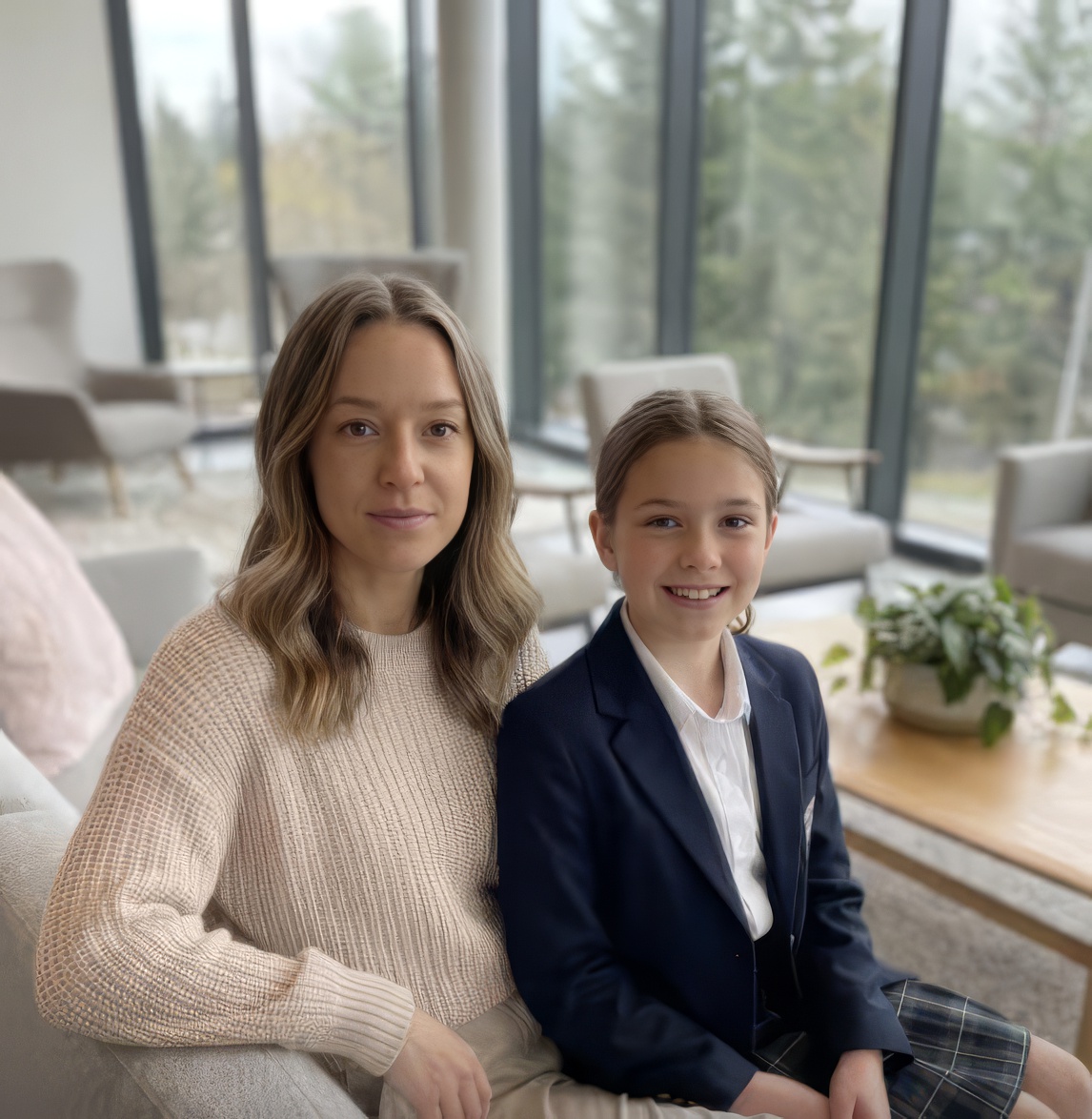
Hi, I'm Ava. My daughter started Year 7 in 2021. By the third week of Term 1, she'd stopped talking to me.
She wasn't angry. Nothing dramatic had happened. She just… drifted. The kid who used to tell me everything started giving me one-word answers. The bedroom door started closing earlier. The space between us grew quietly, almost politely.
I've worked in childcare for seven years as an early childhood educator, so I knew — professionally — what transition looks like. The identity shift. The social reshuffle. The cognitive load of a brand-new environment. But knowing the theory didn't help when it was happening at my own kitchen bench.
So I started paying attention. Reading. Trying things. I worked out — slowly, mostly by getting it wrong — what kept the door open and what slammed it shut. Some of it was uncomfortable to learn. Most of my parenting instincts were making things worse, not better.
But it worked. She came back.
Then I started getting the same call from friends. “My son won't talk to me anymore — he just started Year 7.” I'd walk them through what I'd learned. They'd try it. It would help.
The Bridge Program is everything I wish someone had handed me at the start of Year 6 — before the door started closing, while there was still time to prepare both of us.
It's built from what worked at my own kitchen bench. Not theory. Not what should work in a textbook. What actually works on a Tuesday night with a tired eleven-year-old who won't make eye contact.
Module 1 is built specifically for families with children aged 10–13 — Year 5, 6, or 7. Whether your child is a year away from high school or just started, this program meets them exactly where they are right now.
About 10–15 minutes per day. The parent lessons are 10–12 minutes. The child content on Day 3 takes about 15 minutes. Day 5 is a real conversation — that takes as long as it takes, and that's the point.
No. Everything is accessed through your parent account. Your child watches their content on your device — phone, tablet, or computer. No separate login, no child data collected, no apps to download.
The child content is designed to feel like something they discovered — not something assigned. It's story-driven, short, and made for their attention span. But if they don't engage, the parent lessons alone still change how you show up — and that changes the dynamic regardless.
No. This is an educational program built by a parent, not a clinical intervention. If your child is experiencing significant mental health challenges, we always recommend professional support. This program is designed to complement that, not replace it.
Module 1 is a complete experience that stands on its own. If you want to continue, additional modules covering emotions, communication, resilience, and more are being released soon — but there's no pressure. Module 1 will give your family real tools you'll use long after the 5 days are over.
For the first five days, I'll be in your inbox each morning as the day's lesson unlocks — a short nudge on what to try that day. And well beyond those five days, I'll keep sending the occasional tip and bit of help — the things I learned the hard way, walking this road with my own daughter. For as long as you'd like them.
High school is a lot for a 12-year-old. We help Australian parents get their child ready — before it gets too much and they stop talking.
The Bridge Program and all Raising Thinkers programs are intended for educational and informational purposes only. The content is based on research, lived parenting experience, and general child-development principles. It is not therapy, counselling, or clinical intervention, and it is not a substitute for professional psychological, medical, or educational advice. If your child is experiencing significant emotional or mental-health challenges, please seek support from a qualified professional. Our program is designed to complement professional support, not replace it.
Results and outcomes vary from family to family. Every child and every family is different, and we make no guarantee that the strategies or tools provided will produce specific results for your situation. What works for one family may not work for another, and we encourage you to use your own judgement in applying any of the guidance shared.
Your purchase includes instant digital access to the program content. If the program isn't right for your family, you may request a full refund within 30 days of purchase — no reason required, and you keep the book. Full details are set out in our Terms of Use. Nothing in this disclaimer limits or excludes any rights you have under the Australian Consumer Law, including the consumer guarantees that cannot be excluded.
By completing your purchase, you agree to receive your program access and a series of related emails from Raising Thinkers. We will never sell, share, or misuse your personal information, and you can unsubscribe from marketing emails at any time with a single click. How we handle your information — and the additional protections we apply to any information relating to children — is set out in our Privacy Policy.
This website is not affiliated with, endorsed by, or in any way officially connected to Facebook, Instagram, or Meta Platforms Inc. FACEBOOK and INSTAGRAM are trademarks of Meta Platforms Inc. Our advertising may appear on these platforms, but Raising Thinkers operates independently of them.
© 2026 Raising Thinkers Pty Ltd. All rights reserved.